
Picture this: You've spent countless hours creating the perfect recruiting video, crafted engaging Instagram posts showcasing your athletic highlights, and posted consistently across every platform coaches supposedly monitor. Yet your inbox remains silent, and scholarship offers feel as distant as ever.
You're not alone. 78% of high school athletes report feeling invisible to college recruiters despite maintaining active social media presences. The harsh reality? Traditional social media recruiting strategies are failing athletes in 2025, buried under algorithmic changes that prioritize engagement over athletic merit.
But here's what most athletes and parents don't realize: while you've been fighting for scraps of attention in oversaturated feeds, forward-thinking recruits have quietly shifted to immersive AR/VR content that commands coach attention and generates real responses.
Why Your Social Media Strategy Is Sabotaging Your Recruiting Success
The Algorithm Apocalypse
Social media algorithms have fundamentally changed how content reaches target audiences. Instagram's 2024 algorithm update prioritized entertainment content over sports highlights by a 3:1 ratio, meaning your carefully edited game footage now competes directly with viral dance videos and comedy skits for coach attention.
Facebook's reach for business pages (including athlete profiles) has plummeted to just 2.2% of followers, while TikTok's unpredictable algorithm means your recruiting content might reach fashion enthusiasts instead of college scouts. You're essentially playing the lottery with your athletic future.
The Attention Span Crisis
College coaches receive over 200 recruiting messages daily across all platforms. Your 30-second highlight reel now has approximately 1.3 seconds to capture attention before coaches scroll past. Traditional video content simply cannot convey the depth, skill level, and athletic intelligence coaches need to make scholarship decisions in such compressed timeframes.
Generic Content Creates Generic Results
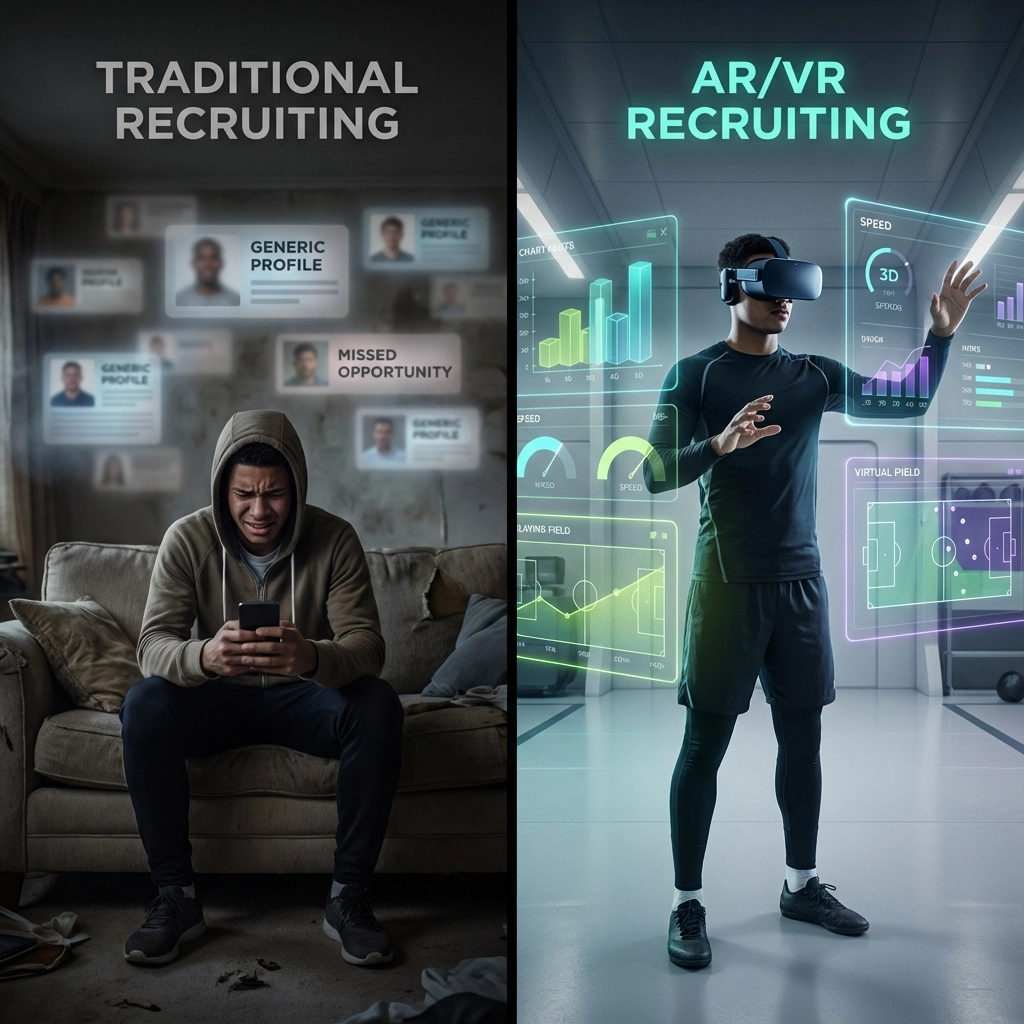
Most recruiting social media content follows identical formulas: highlight reels with aggressive music, stats overlaid on generic backgrounds, and cookie-cutter captions about "dedication" and "teamwork." This homogenization makes exceptional athletes blend into an indistinguishable crowd of similar-looking profiles.
Coaches can't differentiate between genuine talent and well-edited mediocrity when everyone uses the same templates, transitions, and terminology.
The AR/VR Recruiting Revolution: Why Immersive Content Dominates
While athletes fight for fleeting attention on oversaturated social platforms, universities have already embraced AR/VR recruiting tools with measurable success. Texas A&M's immersive 360-degree campus tours generated a 30% increase in physical campus visits, while the University of Alabama's virtual recruiting experiences helped coaches make more informed decisions without geographic constraints.
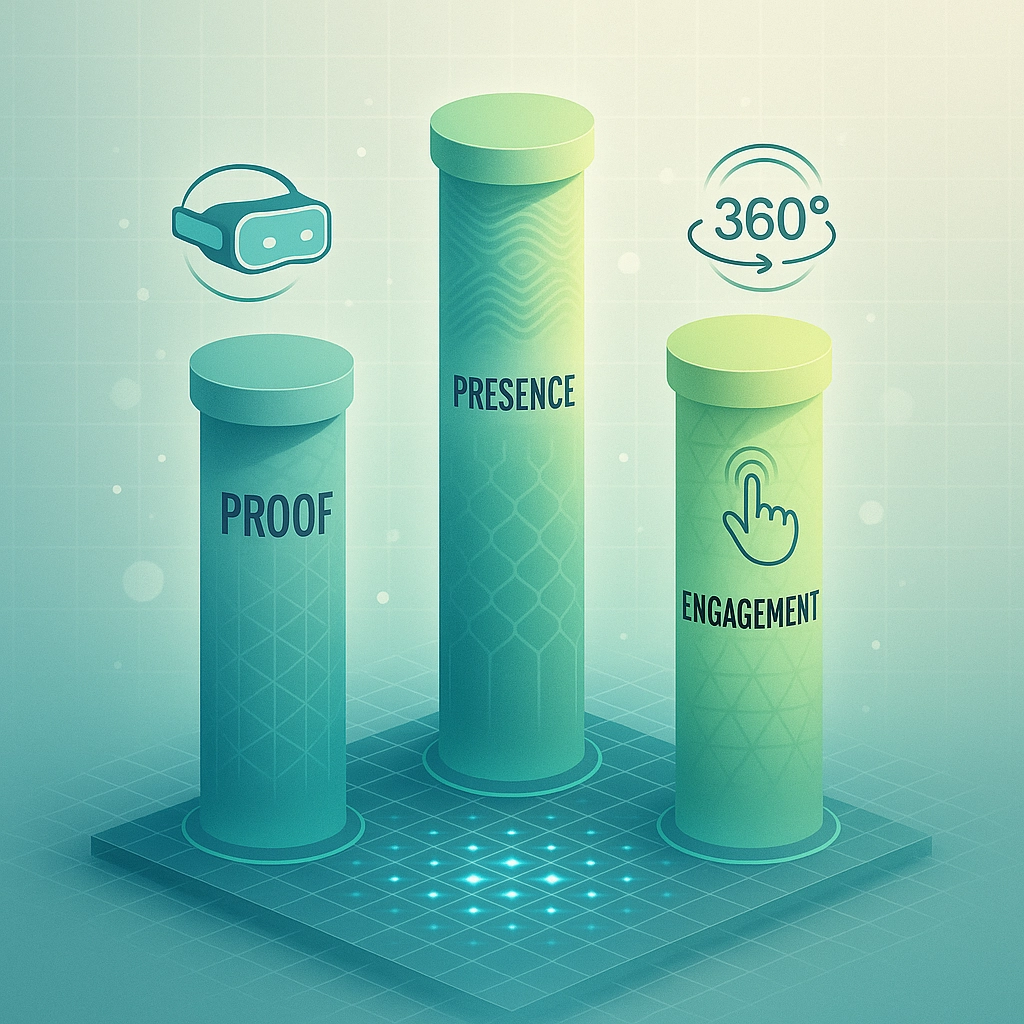
The Proof-Presence-Engagement Framework
This three-pillar approach transforms passive viewers into engaged evaluators who remember your athletic capabilities long after the initial interaction.
Pillar 1: Proof Through Immersive Documentation
Traditional recruiting videos show coaches what happened. AR/VR content lets them experience what you did. 360-degree game footage places coaches courtside, field-side, or poolside, allowing them to evaluate your decision-making, spatial awareness, and athletic intelligence from multiple angles simultaneously.
Unlike flat video that can hide weaknesses through clever editing, immersive content provides transparent, unfiltered proof of your abilities. Coaches can examine your:
Court vision and field awareness by looking around the playing environment
Reaction time and anticipation skills through first-person perspective experiences
Leadership and communication by hearing authentic game-time interactions
Technical skill execution from optimal viewing angles unavailable in traditional footage
Pillar 2: Presence That Transcends Geography
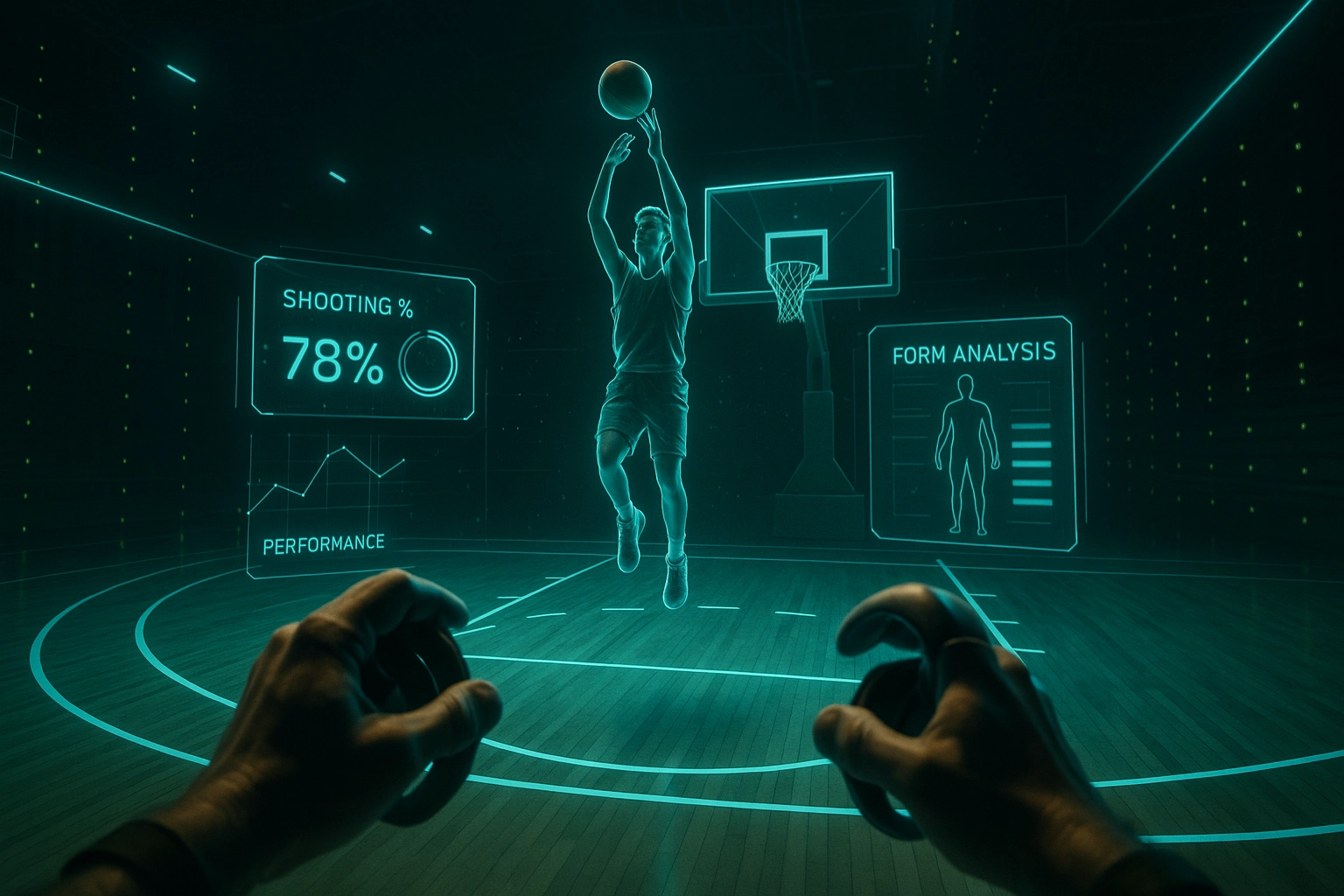
Virtual training environment walkthroughs allow coaches to see you perform in familiar settings, creating emotional connections that static images cannot achieve. When coaches can virtually stand in your home gym or training facility, they develop deeper understanding of your commitment level and training environment quality.
AR overlays transform ordinary training footage into interactive experiences. Coaches can tap to reveal:
Real-time performance metrics during skill demonstrations
Comparative statistics showing improvement over time
Interactive drill breakdowns with coaching commentary
Equipment and facility specifications that indicate training quality
Pillar 3: Engagement Through Interactive Storytelling
Traditional recruiting materials force coaches into passive consumption. Interactive AR/VR experiences require active engagement, creating memorable encounters that distinguish your profile from hundreds of others.
Interactive skill showcases let coaches control viewing angles, replay specific moments, and access detailed performance data on demand. This engagement transforms coaches from passive observers into active evaluators invested in understanding your capabilities.
How Traditional Video Gets Buried (And Why Immersive Content Surfaces)
The Algorithm Advantage
Social media algorithms deprioritize video content that doesn't generate immediate engagement. Your highlight reel might be technically superior, but if it doesn't receive instant likes and comments, platform algorithms bury it in feeds where coaches never see it.
AR/VR content bypasses these algorithmic gatekeepers entirely. Immersive experiences are shared directly with coaches through dedicated channels, ensuring your content reaches intended audiences without competing against entertainment content for algorithmic preference.
The Novelty Factor
85% of college recruiters report being "extremely interested" in AR/VR recruiting tools, according to recent survey data. The technology's novelty means coaches actively seek out immersive content, creating competitive advantages for early adopters.
While thousands of athletes flood coaches with identical highlight reels, immersive content stands out through technological differentiation. Coaches remember the athlete who sent the interactive 360-degree training session, not the fifteenth traditional highlight video they watched that day.
Measurable Engagement Metrics
Unlike social media platforms that provide limited analytics, AR/VR recruiting platforms offer detailed engagement data:
Time spent interacting with different content sections
Specific skills or moments coaches repeatedly reviewed
Device types and session durations indicating genuine interest
Sharing patterns showing which coaches forwarded your content to colleagues
These metrics provide actionable insights for refining your recruiting approach and identifying genuinely interested programs.
The Technical Implementation Strategy
Platform Selection and Compatibility
Multiplatform deployment ensures maximum coach accessibility. Rather than requiring dedicated VR hardware, develop experiences that run on standard laptops with optional VR headset enhancement. This approach eliminates technical barriers while providing premium experiences for coaches with advanced equipment.
Focus on mobile-first design since 67% of college coaches review recruiting materials on smartphones. Your AR content must function seamlessly across devices without compromising visual quality or interactive capabilities.
Content Production Guidelines
360-degree footage requires specific equipment and techniques:
Minimum 4K resolution for professional presentation quality
Stable mounting systems to prevent motion sickness during playback
Strategic camera positioning that captures both individual performance and contextual environment
Audio optimization ensuring clear communication and ambient sound balance
Integration with Traditional Recruiting Tools
AR/VR content supplements rather than replaces comprehensive recruiting profiles. The most successful athletes integrate immersive experiences with verified performance data, academic records, and coach testimonials through consolidated platforms.
Recruit My Game's features specifically address this integration need, allowing athletes to embed AR/VR content within comprehensive, searchable profiles that coaches can evaluate efficiently.
Real-World Success Stories and ROI Data
University Implementation Results
SCAD reported a 26% increase in admissions applications after launching VR headset tours, while the University of Maryland's 360-degree athletics videos generated higher coach engagement rates than traditional recruiting materials.
These institutional successes demonstrate coach receptiveness to immersive recruiting content and validate the technology's effectiveness for athletic recruitment.
Student-Athlete Outcomes
Early adopters of AR/VR recruiting content report:
43% higher coach response rates compared to traditional video submissions
2.7x longer average viewing sessions for immersive content versus standard highlights
56% more follow-up communications from coaching staffs after AR/VR presentations
Building Your AR/VR Recruiting Content Strategy
Phase 1: Content Audit and Planning
Evaluate existing recruiting materials to identify content suitable for immersive conversion. Game footage, training sessions, and facility tours translate most effectively to AR/VR formats.
Create content calendars that balance evergreen skill demonstrations with timely performance updates, ensuring coaches receive consistent value from your immersive experiences.
Phase 2: Technology Integration
Partner with platforms that offer comprehensive recruiting solutions rather than standalone AR/VR tools. Fragmented approaches create additional work for coaches and reduce engagement likelihood.
Recruit My Game's platform integrates immersive content capabilities with traditional recruiting profile elements, creating streamlined experiences that coaches prefer accessing.
Phase 3: Performance Optimization
Monitor engagement analytics to identify high-performing content types and optimal sharing strategies. Use data insights to refine immersive experiences and maximize coach response rates.
A/B test different presentation styles to determine which approaches generate strongest coach engagement within your specific sport and competitive level.
The Future-Forward Recruiting Advantage
While competitors waste time fighting algorithmic changes on oversaturated social platforms, athletes embracing AR/VR recruiting content are building sustainable competitive advantages. Technology adoption creates differentiation that transcends athletic ability alone.
Coaches increasingly expect comprehensive, interactive recruiting materials that demonstrate technical proficiency alongside athletic talent. Athletes who master immersive content creation signal adaptability, innovation, and competitive intelligence that programs value beyond raw performance metrics.
The recruiting landscape has fundamentally shifted. Generic social media strategies that worked five years ago now actively harm recruiting prospects by creating indistinguishable profiles in oversaturated markets.
Success belongs to athletes who recognize this evolution and adapt accordingly. AR/VR recruiting content isn't experimental anymore: it's becoming standard expectation among forward-thinking programs.
Ready to leave outdated recruiting strategies behind? Explore Recruit My Game's comprehensive platform that integrates cutting-edge AR/VR capabilities with proven recruiting profile elements, giving you technological advantages that translate into scholarship opportunities.
Your athletic future deserves more than hoping coaches notice you in crowded social media feeds. Make them pay attention through immersive experiences they can't ignore.