
Picture this: Two athletes. Same sport. Nearly identical stats. One gets recruited to their dream school. The other barely gets a callback.
What made the difference?
This is the question that keeps parents up at night and athletes second-guessing every decision. Should you focus on perfecting your 40-yard dash time? Or should you spend that energy building relationships with coaches?
The truth is more nuanced than most recruiting "experts" want you to believe. Let's bust some myths and give you a clear picture of what actually matters in 2026.
What Are Verified Metrics, Anyway?
Before we dive in, let's get on the same page.
Verified metrics are athletic performance numbers that have been officially recorded, tested, or confirmed by a credible third party. Think:
Timed sprints from official combines
Vertical jump measurements from certified testing events
Game statistics verified by coaches or athletic directors
Academic records (GPA, test scores) confirmed by schools
The key word here is verified. Anyone can claim they run a 4.5-second 40-yard dash on their profile. But when a coach or testing organization confirms that number? That's when it carries weight.
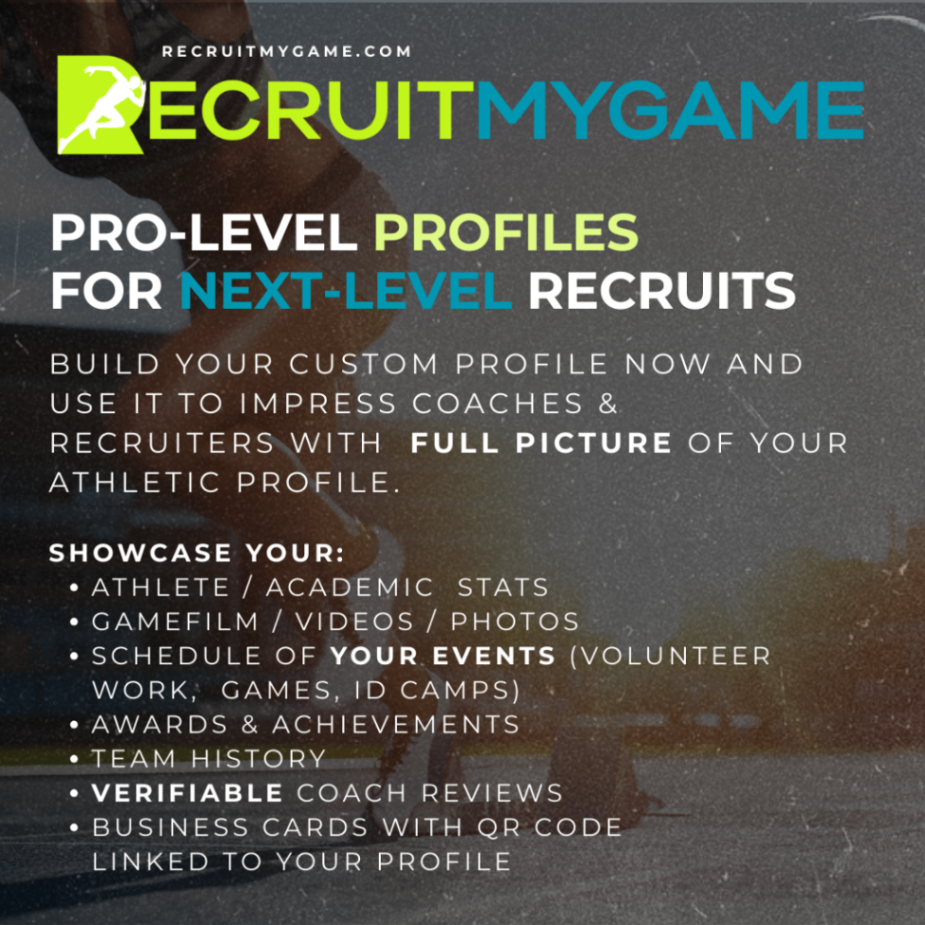
As shown above, platforms like Recruit My Game allow athletes to build profiles with verifiable coach reviews and documented stats, giving college recruiters confidence that what they're seeing is legit.
What Do Coach Connections Actually Mean?
When we talk about "coach connections," we're not just talking about knowing someone's name.
Real coach connections include:
Your high school coach's network , Do they have relationships with college programs?
Direct communication , Has a college coach actually seen you play or spoken with your current coach?
Trusted recommendations , Will your coach vouch for you beyond just your stats?
Here's the thing most families don't realize: College coaches are drowning in messages.
They receive hundreds of emails, DMs, and recruiting platform notifications every single day. Most of it is unverified noise. When a trusted high school coach reaches out and says, "Hey, you need to look at this kid", that cuts through immediately.
The Myth: "Numbers Don't Lie, So Stats Are Everything"
Reality check: Numbers only tell part of the story.
Yes, a 4.4-second 40 time is impressive. Yes, a .450 batting average catches attention. But here's what raw stats can't tell a college coach:
Can this athlete handle pressure?
Will they fit our team culture?
Do they work hard when no one's watching?
Are they coachable?
College coaches aren't just filling roster spots. They're building programs. They need athletes who will contribute on AND off the field.
This is exactly why coach evaluations matter so much. Your high school coach can speak to your character, mental toughness, leadership, and work ethic: things that never show up on a stat sheet.
The takeaway: Great numbers get you noticed. But they rarely seal the deal alone.
The Myth: "It's All About Who You Know"
Reality check: Connections without substance won't get you far.
Some families believe that if they just network hard enough: attend enough camps, shake enough hands, send enough emails: they'll land a spot.
But here's the problem: A coach connection only works when there's something real to back it up.
If your high school coach calls a college recruiter and says, "You've got to see this kid," the recruiter's next question will be: "What are their numbers?"
Connections open doors. Verified performance is what gets you through them.
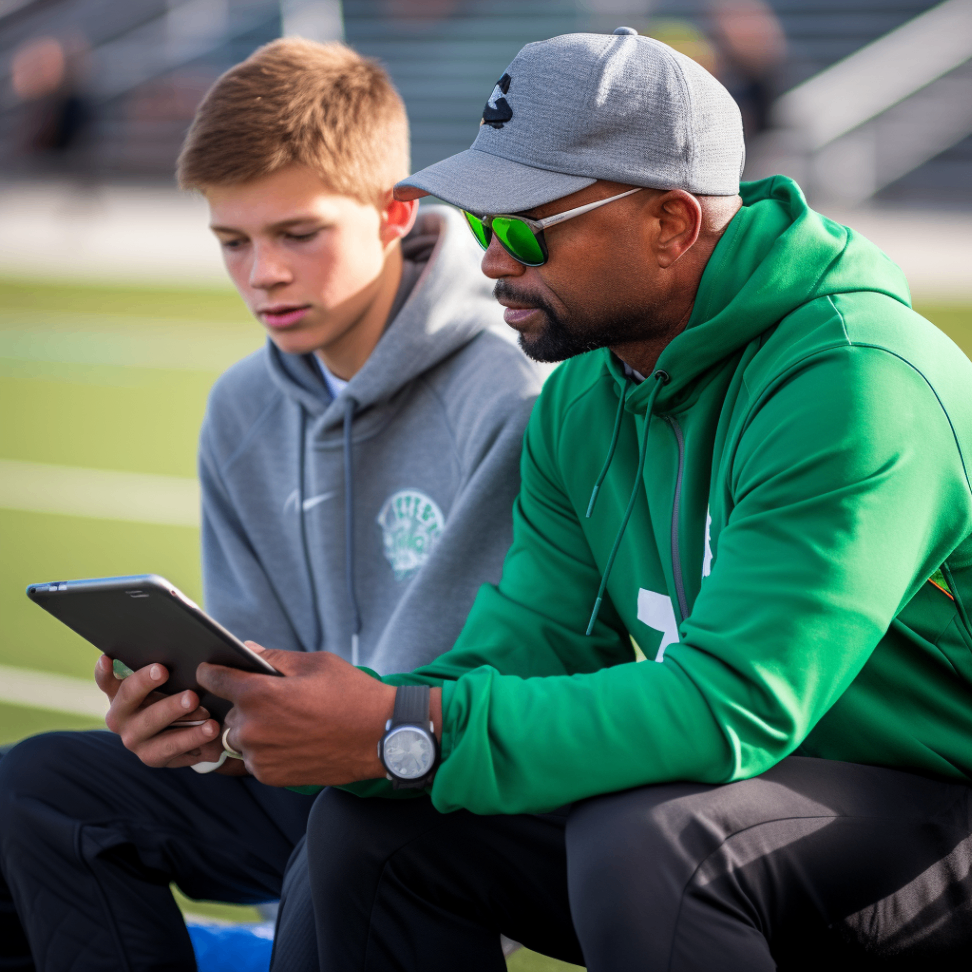
So... What Actually Matters More?
Here's the honest answer: You need both.
But the balance isn't 50/50. And it shifts depending on where you are in the recruiting process.
Early Stage: Metrics Matter More
When college coaches are first scanning prospects, they're filtering by numbers. They have specific athletic benchmarks they're looking for.
If your verified metrics don't hit their baseline requirements, you often won't make it past the initial filter: no matter who vouches for you.
Mid Stage: Connections Take Over
Once you've made it past the numbers filter, relationships become critical.
This is when:
Your high school coach's recommendation carries serious weight
Direct communication with college coaches matters
Campus visits and personal interactions shape decisions
Final Stage: Character Seals It
At decision time, coaches are asking: "Do I want this person in my program for 4 years?"
This is where those intangible qualities: work ethic, leadership, coachability: make or break offers. And those qualities are communicated through trusted coach relationships, not spreadsheets.
Watch Out For These Red Flags
Not everything in the recruiting world is what it seems. Here are some warning signs families should know:
🚩 Services That Promise Exposure Without Verification
If a recruiting service just blasts your profile to hundreds of coaches without any verified metrics or coach endorsements, you're likely wasting money.
College coaches ignore mass emails from unknown sources. What they trust is verified information from credible sources.
🚩 Inflated Stats With No Backup
We've all seen profiles with eye-popping numbers that seem too good to be true. If your metrics aren't verified by a coach, combine, or official event: recruiters will be skeptical.
Worse, if they find out stats were exaggerated, your credibility is gone.
🚩 Ignoring Your High School Coach
Some families try to go around their high school coach entirely, thinking they can handle recruiting on their own.
This is almost always a mistake. Your coach is your most valuable advocate. They have relationships you don't have access to. They can speak to your abilities in ways you can't speak about yourself.
🚩 Focusing Only on One Side
Athletes who obsess over metrics but ignore relationship-building often plateau. Athletes who network constantly but neglect performance development don't have substance to back up the hype.
The winning formula combines both.
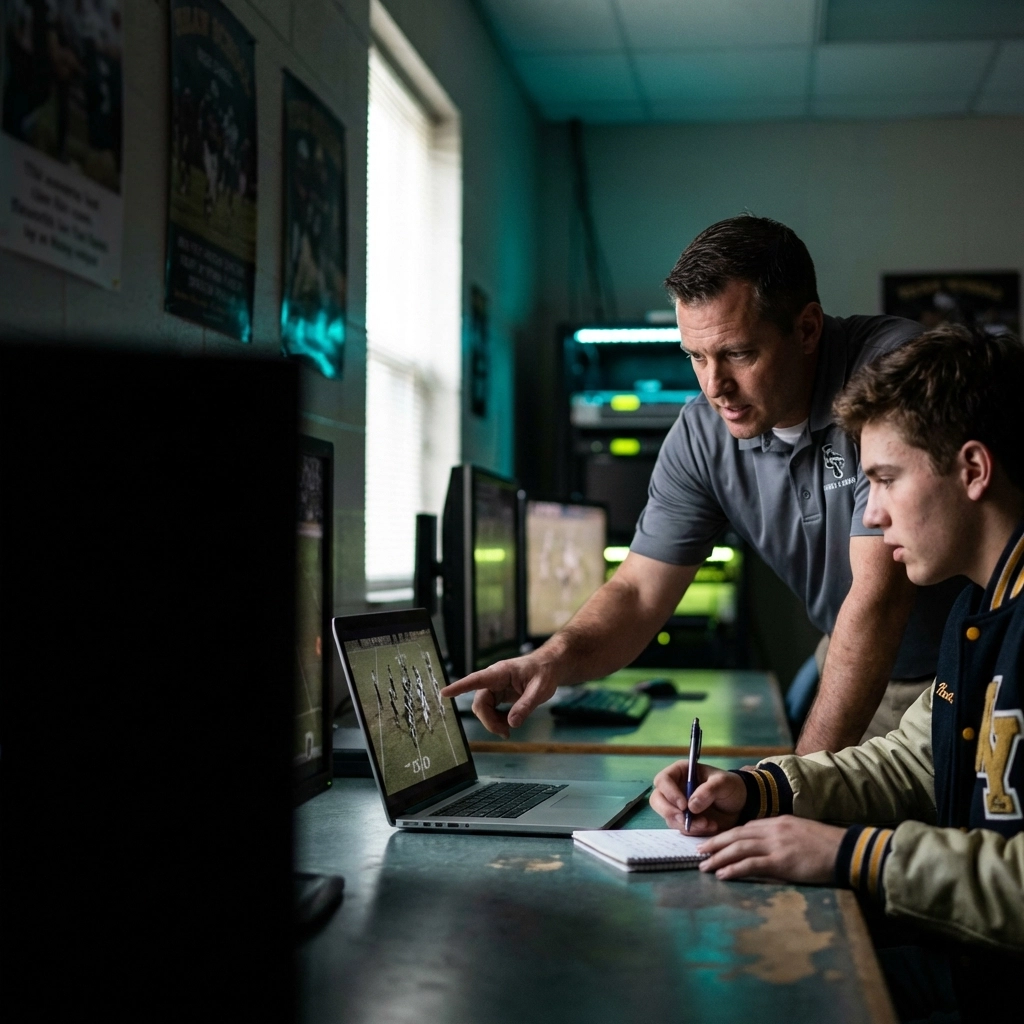
Practical Steps for Parents and Athletes
Ready to put this into action? Here's your game plan:
For Athletes:
Get your metrics verified. Attend official combines, testing events, or use platforms that offer coach-verified reviews.
Build a real relationship with your high school coach. Be coachable. Work hard. Make it easy for them to advocate for you.
Create a complete athlete profile. Include verified stats, game film, academic info, and coach endorsements all in one place.
Communicate directly with college programs. But lead with substance, not just enthusiasm.
For Parents:
Support, don't bypass, the high school coach. They're your biggest ally in this process.
Invest in verification, not just exposure. Quality over quantity wins every time.
Help your athlete understand the full picture. It's not just about being fast or strong: it's about being the complete package.
Be patient. Recruiting is a process, not an event. Building relationships and developing metrics both take time.
The Bottom Line
Here's what you need to remember:
Verified metrics get you in the conversation. They're the baseline filter that proves you belong athletically.
Coach connections get you through the door. They provide credibility, context, and character references that numbers alone can't offer.
Neither works without the other.
The athletes who land roster spots in 2026 and beyond will be the ones who understand this balance. They'll invest in both their measurable performance AND their relationships with coaches who can advocate for them.
Don't fall for the myth that it's one or the other. The real competitive advantage comes from combining verified, credible metrics with authentic coach relationships that speak to who you are as a complete athlete and person.
Ready to build a profile that showcases both your verified metrics AND coach endorsements? Create your Recruit My Game profile today and give college coaches everything they need to say yes( all in one place.)